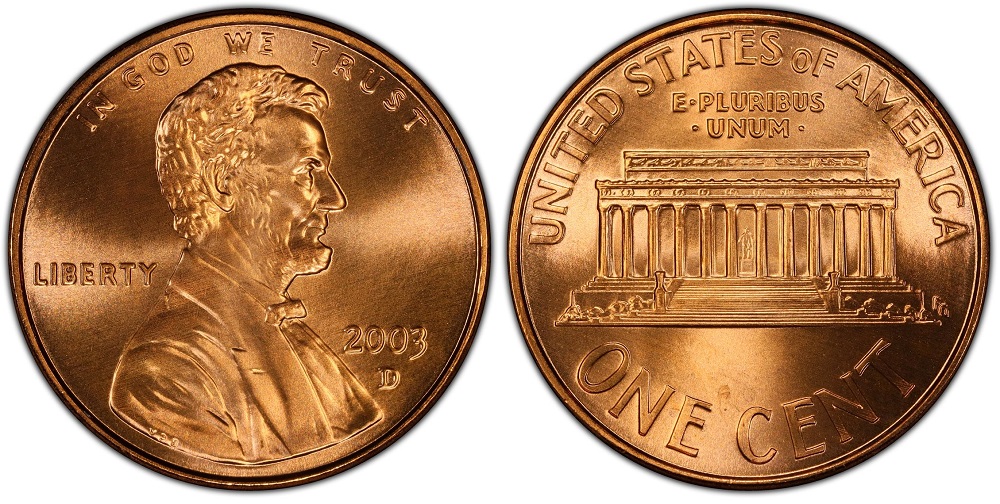
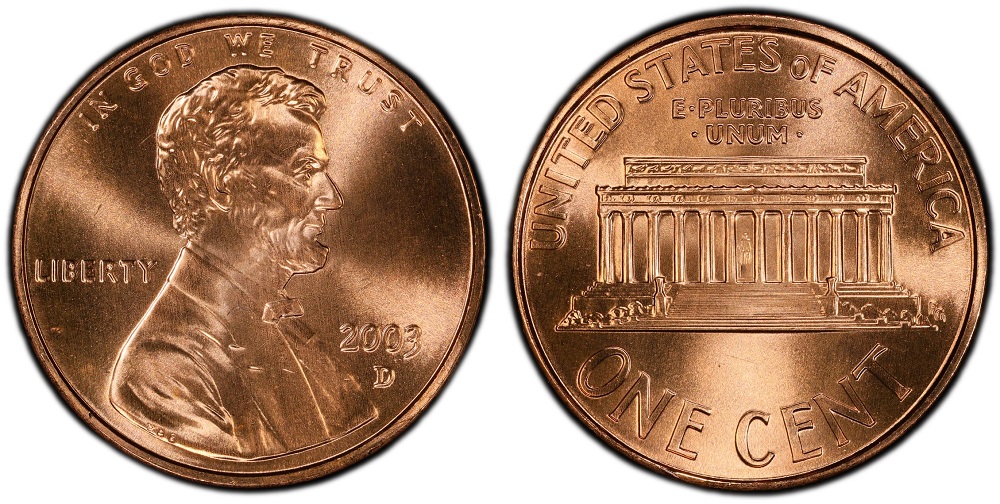
One 2003 Philadelphia penny graded MS70 RD by PCGS sold at Teletrade for $15,120 — the only circulation-strike Lincoln cent ever assigned that perfect grade. Most 2003 pennies are worth face value, but the right combination of mint mark, full-red luster, and error variety can push yours into serious collectible territory. Use the free tools below to find out exactly where yours stands.
Before you run any calculations, this table gives you a rapid overview of what every 2003 Lincoln Memorial penny variety is worth across all four condition tiers. For a full illustrated step-by-step 2003 penny identification walkthrough and reference guide, bookmark that resource alongside this page. The gold-highlighted row is the most-searched signature variety; the red-highlighted row shows the rarest documented sale.
| Variety | Worn / Circulated | Uncirculated (MS63) | Gem (MS65 RD) | Top Gem (MS68+ RD) |
|---|---|---|---|---|
| 2003-P (No Mint Mark) | $0.01 | ~$0.80 | ~$4 | $60 – $175+ |
| 2003-D (Denver) | $0.01 | ~$0.80 | ~$4 | $60 – $595+ |
| 2003-S Proof (PR65) | N/A | N/A | ~$4 – $5 | $30 – $229+ |
| 2003 DDO (Doubled Die Obverse) | $10 – $30 | $25 – $100 | $100 – $200+ | $200 – $600+ |
| 2003-D Broadstrike Error | $10 – $25 | $25 – $150 | $200 – $500 | $500 – $925+ |
| 2003 Off-Center Strike | $5 – $20 | $20 – $75 | $75 – $150 | $100 – $500+ |
| 2003 BIE Die-Crack Variety | $5 – $10 | $10 – $25 | $15 – $40 | $25 – $75 |
Values are estimates based on recent market data. Circulated error coins may vary. DDO row highlighted in gold = signature variety. Broadstrike row highlighted in red = rarest documented auction result.
🪙 CoinKnow lets you photograph your 2003 penny and cross-check its value estimate against current market data — a coin identifier and value app.
Jump to the section you need:
With nearly 7 billion 2003 pennies struck, errors are statistically rare but absolutely findable. The varieties below range from modest premiums to genuine hundred-dollar coins — knowing exactly what each looks like under a loupe is the difference between spending a collectible and cashing in on it. Every card below covers what the error is, how to find it, and what drives its market value.
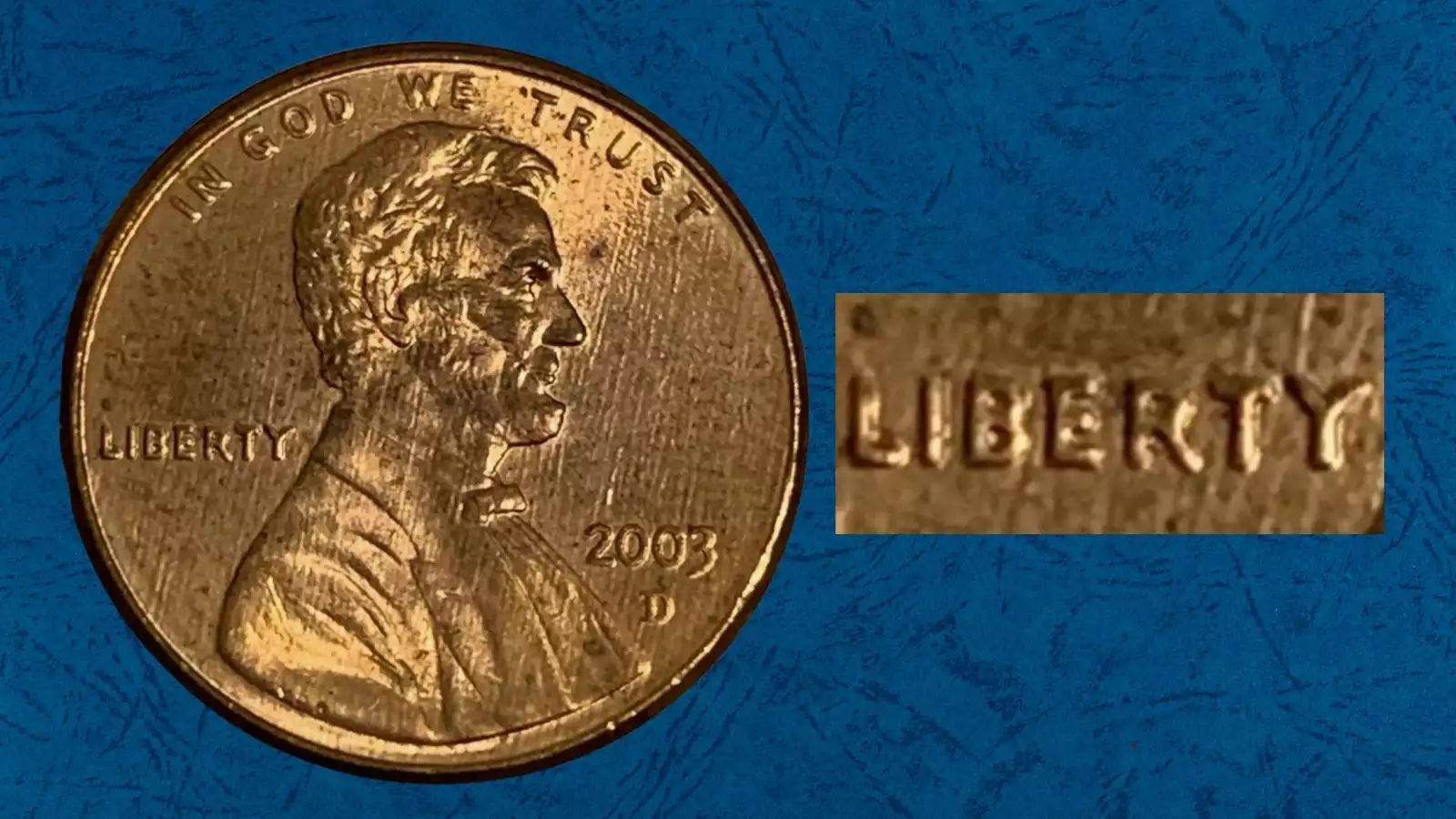
The Doubled Die Obverse error occurs when the working hub imprints the die at slightly different rotational or lateral positions in successive blows during die preparation. On 2003 pennies, this mechanical mishap during the hubbing process leaves a permanent secondary impression baked into the die itself — meaning every coin struck by that die carries the doubling.
Look for rounded, three-dimensional separation between the primary and secondary images on Lincoln's eye, eyelid, and ear. The inscriptions "LIBERTY" and "IN GOD WE TRUST" often show doubling as well. True DDO differs from worthless machine doubling by its depth and consistency — a shadow-like, slightly offset ghost image follows the main design element. Denver (D) mint 2003 pennies show DDO more frequently than Philadelphia examples.
Collectors pay a premium because documented hub-doubled dies are attributable variety coins with CONECA and Coppercoins listings (e.g., WDDR-027 cross-references exist for the reverse doubled die as well). Strong DDO examples in MS65 RD can breach $200 at auction, while naked-eye-visible examples in any grade command at least $100.
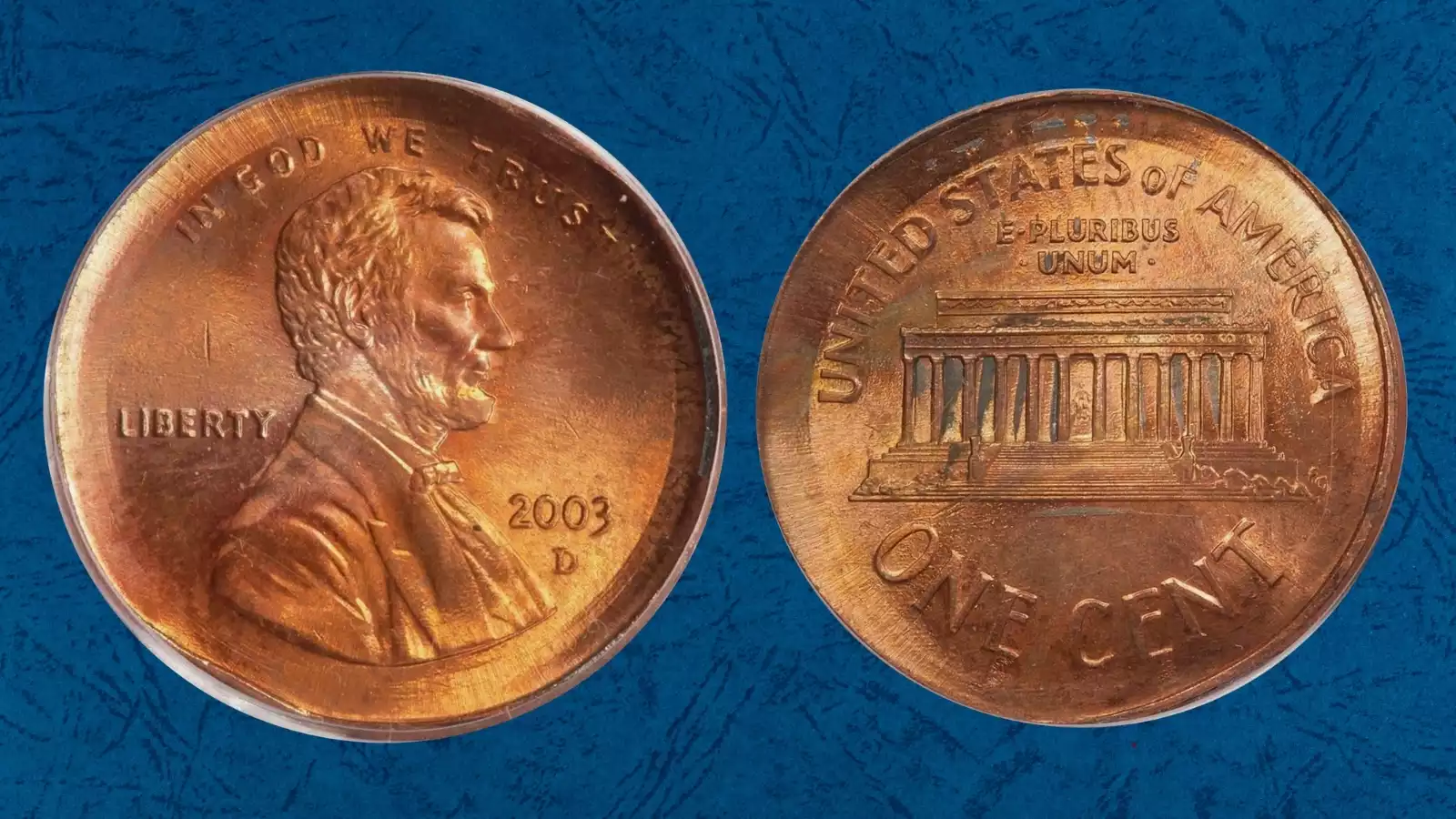
A broadstrike occurs when the retaining collar — the steel ring that holds the blank planchet in precise position during striking — is absent or malfunctions. Without the collar to contain it, the planchet spreads outward under the full force of the die strike, producing a coin that is measurably wider and noticeably thinner than a normal 2003 penny. The rim either disappears entirely or is severely deformed.
Visually, a broadstrike 2003 penny looks flattened and oversized. The design elements are present but slightly compressed toward the edges. No raised rim circles the coin. Measure with calipers — normal diameter is 19.05 mm; a broadstrike will exceed that. Every design element remains readable, distinguishing this from an off-center error where imagery is cut off.
This is one of the most dramatic and sought-after mechanical errors in the 2003 Lincoln cent series. A 2003-D broadstrike graded MS64 sold at Great Collections in 2018 for $925, demonstrating that exceptional collar errors can enter genuine collector territory regardless of the coin's otherwise common date. The more dramatic the spread, the higher the premium.
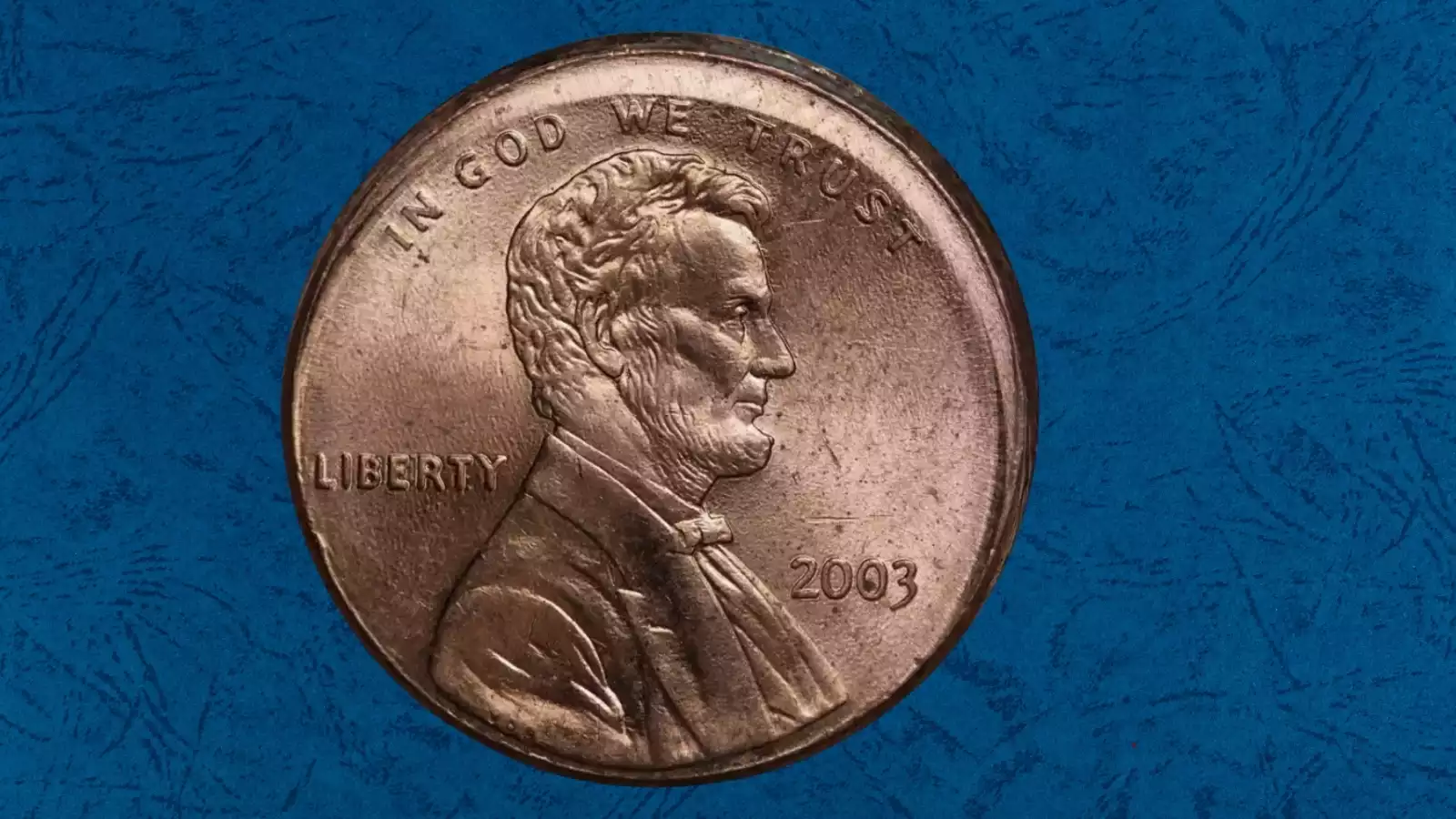
An off-center strike happens when the planchet is not properly seated over the die at the moment of striking. The coin's imagery is displaced to one side, leaving a blank, unstruck crescent of planchet metal on the opposite side. The degree of misalignment is expressed as a percentage — a 50% off-center strike means half the coin design is missing.
Value is directly tied to two factors: the percentage of offset and whether the date remains visible. A 10%–20% off-center 2003 penny is common and worth only $5–$10. Strikes of 50%–60% off-center that still clearly show "2003" and the mint mark (if applicable) are the prized examples, fetching $100 or more in circulated grades and considerably more in mint state.
The combination of dramatic visual appeal and verifiable date preservation makes high-percentage off-center 2003 pennies popular impulse purchases at coin shows and online auctions. Collectors of Lincoln cent errors specifically seek the 40%–60% sweet spot where the displacement is visually arresting but the date and letter details are still readable for attribution.
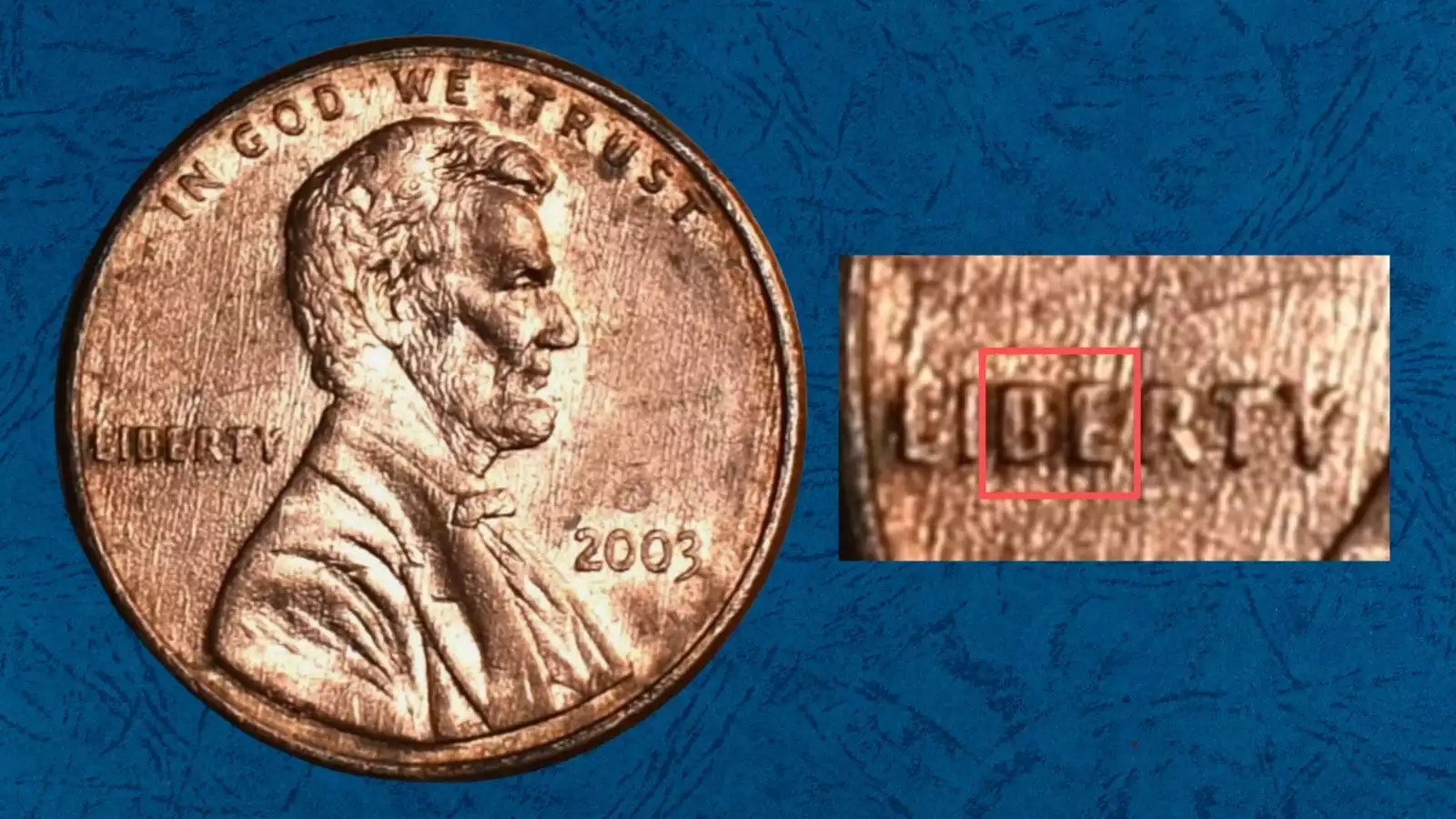
The BIE variety is unique to Lincoln cents and occurs when a die crack develops on the obverse die between the letters "B" and "E" in the word "LIBERTY." As the die ages under repeated striking pressure, a vertical crack forms in that exact location. Metal flows into the crack during striking, creating a small raised ridge on the finished coin that mimics the capital letter "I."
On a 2003 penny with a BIE error, the inscription "LIBERTY" effectively appears to read "BIET" at a glance — hence the nickname. The "I" will be slightly raised above the coin's surface (it is a raised metal line, not incuse) and will be consistent across all examples struck by that die in the same die state. More advanced die states show a thicker, more pronounced crack.
While not the most financially rewarding error in the 2003 series, BIE coins are extremely popular beginner collector targets because they are recognizable without magnification, unambiguously real errors, and affordable. Advanced collectors seek later die-state examples where the crack has propagated further, creating more dramatic visual impact and stronger BIE definition. Typical premium is $5–$25 for circulated examples.
A partial collar strike — also called a railroad rim error — occurs when the planchet sits only partially within the retaining collar at the moment of striking. One side of the coin is constrained normally, producing a standard raised rim, while the opposite side is unconstrained and spreads outward slightly. This creates a distinctive stepped or tiered edge profile that is the defining diagnostic of this variety.
When viewed from the edge or in profile, the coin shows two distinct levels: a normal-height rim on the constrained side and a sloped, broadstruck-like spreading on the opposite side. The edge looks like a railroad track in cross-section — hence the popular nickname. The obverse and reverse designs are fully visible and intact; the error is entirely in the coin's profile and rim geometry, not the face design.
Partial collar 2003 pennies are less commonly encountered than broadstrikes or off-center strikes because the exact degree of mis-seating required to produce the railroad rim is a very specific mechanical circumstance. The strongest examples — where the step height is dramatic and the contrast between the two rim profiles is stark — are the most collectible and command the highest premiums relative to this error type's typical pricing range.
Run it through the calculator — select your mint mark, condition, and the error you spotted to get an instant value estimate.
Calculate My Error Penny's Value →
| Mint Facility | Mint Mark | Type | Estimated Mintage | Survival Notes |
|---|---|---|---|---|
| Philadelphia, PA | None (P) | Circulation | ~3,300,000,000 | Extremely common in circulated grades; gem RD specimens are scarce above MS67 |
| Denver, CO | D | Circulation | ~3,548,000,000 | Slightly higher mintage than Philadelphia; MS69 RD has sold for $595; DDO appears more frequently |
| San Francisco, CA | S | Proof only | Collector sets only | Sold in annual proof sets; PR70 DCAM is the top-tier collectible; PR65 examples are affordable |
| Total Circulation Strikes | ~6,848,000,000 | One of the highest-production Lincoln cent years | ||
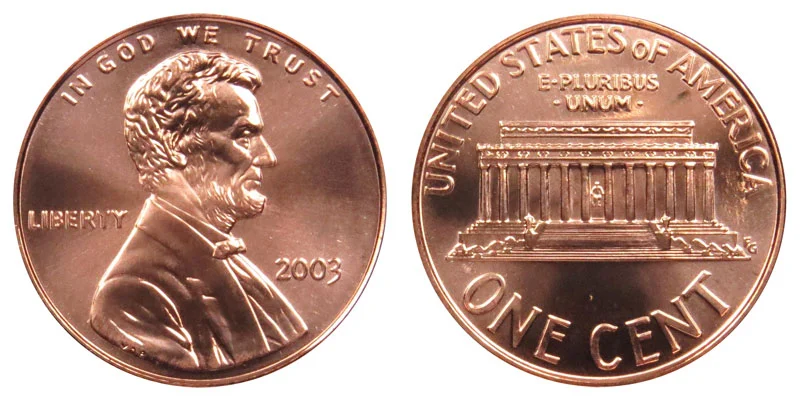
Lincoln's cheekbone, bow tie, and upper hair are flat and smooth. Most fine hair strands above the ear are merged. The Memorial on the reverse shows columns but details are soft. These coins are worth face value only — spend them freely. Color is typically dark brown (BN).
Some hair detail above Lincoln's ear is visible but high points show definite flatness. The Memorial columns are sharper and steps may be partially visible. Color is brown to reddish-brown (RB). Worth face value in most grades; EF examples command a small premium above face value but still only cents.
No wear is present anywhere. Mint cartwheel luster breaks across the surface when the coin is tilted under light. Contact marks from bag friction are permitted at this level. Full Red (RD) color — at least 85–90% original copper luster — is essential for any premium. MS63 RD trades around $0.80.
Near-perfect surfaces with only minor contact marks visible under magnification. Full cartwheel luster, complete strike with sharp hair strands and full Memorial detail, and brilliant copper-red color (RD) are all required. MS65 RD trades around $4; MS69 RD has sold for $175 (Philadelphia) and $595 (Denver).
🔍 CoinKnow can help you match your 2003 penny's surface to graded reference images — a coin identifier and value app.
The Doubled Die Obverse (DDO) is the single most searched 2003 penny variety. Use this checker to determine whether your coin might qualify. Compare it to both columns below, then check the four diagnostic items to get a verdict.
Check all four items that describe your coin:
The DDO checker gives you a yes/no — the calculator below turns that into a dollar estimate based on your specific mint mark and grade.
Calculate My 2003 Penny Value →Select your mint mark, condition, and any errors you've identified. The calculator uses current market data to estimate your coin's value instantly.
If you're not yet sure about your coin's mint mark, condition, or whether it has an error, a free 2003 Penny Coin Value Checker tool lets you upload photos of your coin and get an AI-assisted assessment before diving into these selections.
Not sure where to start with the calculator? Type a description of your coin in plain language below — our analyzer will identify the most likely variety and value range.
Found a gem or error? Here are the four best venues for 2003 Lincoln cents and what each is best suited for.
The best choice for certified gem examples (MS67 RD and above) and significant documented error varieties. Heritage's specialist bidders regularly push high-grade Lincoln cents well above guide prices. Minimum consignment values apply — typically only worthwhile for coins expected to bring $200+. Submissions require grading by PCGS or NGC first.
The most liquid marketplace for mid-range 2003 pennies, especially raw uncirculated examples and minor errors. Check recent sold prices and completed listings for 2003 Lincoln cents in MS-RD before pricing your coin — what collectors have recently paid is far more reliable than asking prices. Smaller broadstrikes and off-center examples sell quickly with good photos.
Ideal for selling quickly without shipping or fees. Dealers will pay 50–70% of market value for common uncirculated 2003 pennies — a fair trade for instant cash and no hassle. Bring several coins at once to increase negotiating leverage. A knowledgeable dealer can also confirm on the spot whether your DDO or broadstrike is genuine, saving you a grading fee.
Best for connecting directly with specialized Lincoln cent collectors who understand the niche market for 2003 errors. The community appreciates detailed photos and honest descriptions. Transaction fees are minimal or zero. Most productive for error coins in the $20–$200 range that are too small for Heritage but deserve more than a dealer's bulk-buy offer.
Most circulated 2003 pennies are worth only face value — $0.01. Uncirculated examples in MS63 condition typically bring around $0.80, while gem MS65 RD coins fetch about $4 to $5. Rare gem specimens in MS68 or MS69 RD can sell for $60 to $175 or more. The record sale for a 2003 Philadelphia penny graded MS70 RD once reached $15,120, making it a true numismatic landmark.
No — the 2003 penny is one of the most common Lincoln cents ever struck. Philadelphia produced roughly 3.3 billion and Denver struck about 3.55 billion, totaling nearly 7 billion circulation strikes. San Francisco added millions of proof coins for collectors. Rarity only emerges at the very top of the grading scale (MS68+) or among documented error varieties like doubled dies and off-center strikes.
A 2003 Doubled Die Obverse (DDO) penny showing strong, clearly separated doubling on Lincoln's eye, ear, or the date typically sells for $25 to $150 in circulated grades. Strong examples graded MS65 RD or above have reached $200 or more at auction. Minor doubling visible only under magnification still commands a small premium of $10 to $30. Denver (D) mint examples appear more frequently than Philadelphia strikes.
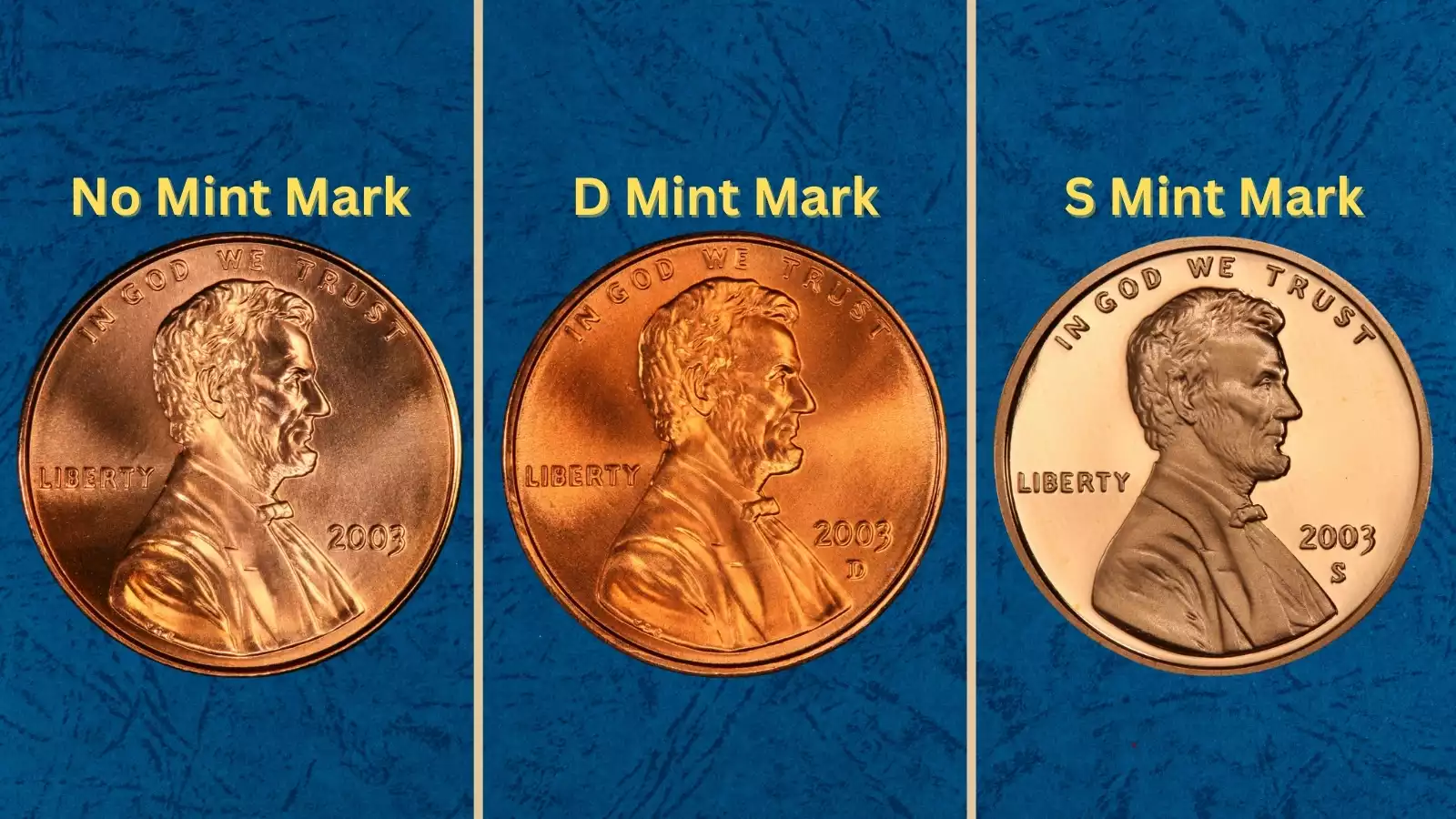
The mint mark on a 2003 penny tells you which U.S. Mint facility struck the coin. A "D" below the date means Denver, Colorado. An "S" means San Francisco, California — these are proof coins made for collectors only. No mint mark means Philadelphia, Pennsylvania. All three varieties share the same copper-plated zinc composition and the Lincoln Memorial reverse design by Frank Gasparro.
An uncirculated 2003 penny shows no trace of wear on Lincoln's cheekbone, hair, and jaw — the highest points that show wear first. The coin should retain original mint luster, which gives the surface a frosty or cartwheel sheen when tilted under light. Most importantly, look for full Red (RD) color: at least 85–90% original copper-plated luster intact. Even light contact marks from bag friction are normal at MS63.
A BIE penny error occurs when a small die crack forms between the "B" and "E" of "LIBERTY" on the obverse, creating the appearance of a capital letter "I" between those two letters. This defect develops as the obverse die ages and cracks under repeated striking pressure. BIE errors on 2003 pennies are mildly collectible, typically selling for $5 to $25 depending on the prominence of the crack and the coin's overall condition.
A 2003 broadstrike penny occurs when the retaining collar is absent during striking, allowing the planchet to expand outward. The coin appears wider and flatter than normal with a deformed or absent rim. Minor broadstrikes typically fetch $10 to $25. More dramatic examples showing significant spreading can be worth considerably more — a 2003-D broadstrike graded MS64 sold at a Great Collections auction for $925, showing how dramatic collar errors command real premiums.
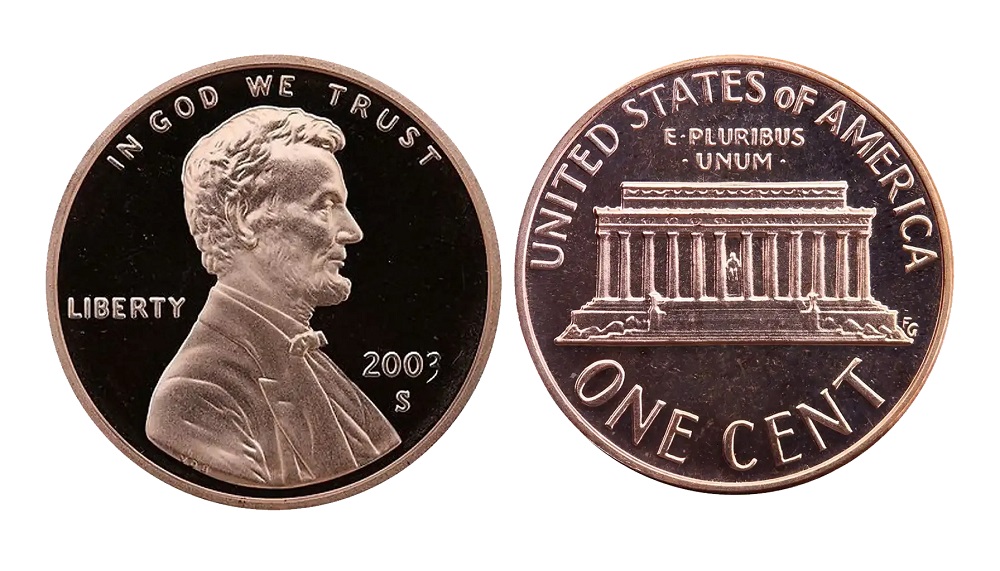
The 2003-S proof penny from San Francisco is worth about $4 to $5 in standard PR65 condition. Deep Cameo (DCAM) proofs showing strong mirror fields and frosted devices command higher premiums. The finest 2003-S proofs graded PR70 DCAM have sold for around $229, while the 2003-S PR70 DCAM is considered the top-tier collectible within the 2003 proof set. Cameo designations add meaningful value above standard proof grades.
The 2003 Lincoln Memorial penny is composed of 99.2% zinc with a thin outer coating of 0.8% copper (copper-plated zinc). This composition has been standard since mid-1982, when rising copper prices forced the change from the previous 95% copper alloy. The coin weighs 2.5 grams, measures 19.05 mm in diameter, and was designed by Victor David Brenner (obverse) and Frank Gasparro (reverse Memorial design, adopted 1959).
Professional grading by PCGS or NGC is generally only worthwhile for 2003 pennies if they appear to grade MS67 RD or above, or if they have a clearly documented error variety. Grading fees typically exceed the coin's value for standard uncirculated examples. However, a coin showing genuine MS68+ quality or strong doubled die doubling can be worth many times the grading cost after certification, making submission economically sensible for exceptional specimens.
The free calculator is right here — no signup, no email required. Just select your mint mark, condition, and any errors you've found.
Use the Free Calculator Now →